Initiative brings together local artists and art teachers to expand resources and mentorship opportunities
By Blair Mitchell
A collaboration between community artists and teachers, spearheaded by the For Alamance Arts & Culture Team, has opened up new possibilities for local students to learn first-hand what pursuing a career in the arts could look like.
The initiative grew out of community conversations where the team repeatedly heard a desire to better support young people and budding artists. Rather than starting with a predetermined program, the team began looking for ways to connect that community interest with local schools.
“A lot of people we talked to wanted to just be available for mentorship or wanted to have more integration with the school system to support teachers,” said Cheryl Wilder, team lead. “The community wanted young people to see working artists and know that it’s a viable option if that is something they wanted to choose.”
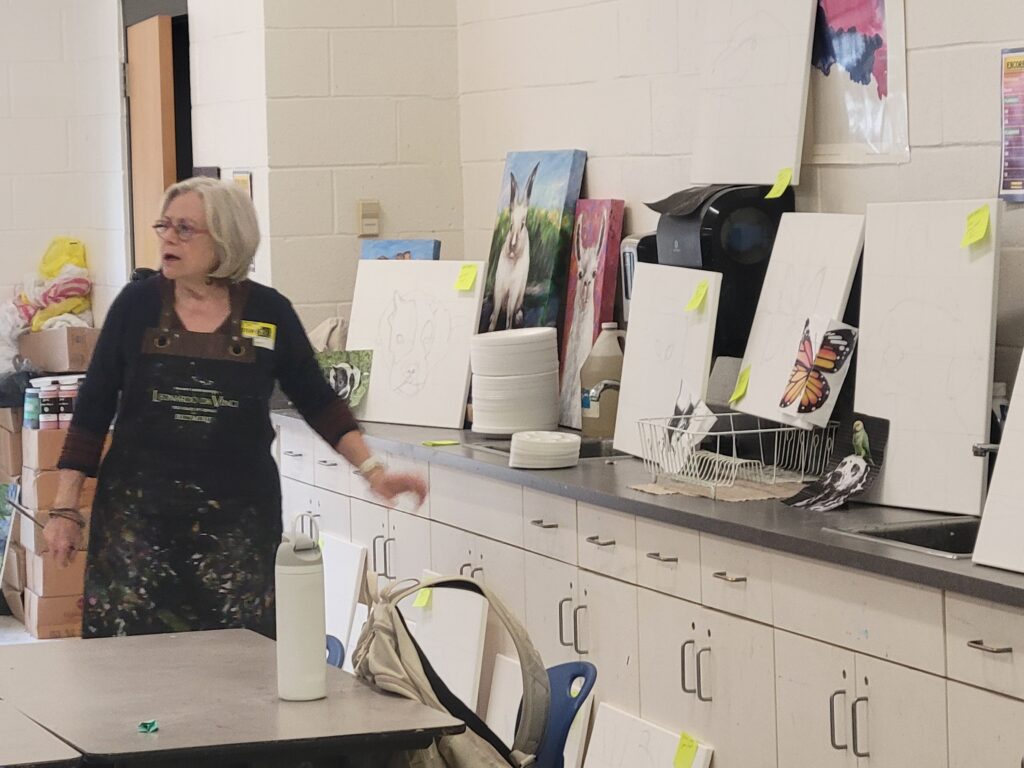
Six professional artists were paired individually with an art teacher at the five participating ABSS schools — Southern Alamance Middle School, Woodlawn Middle School, Cummings High School, Western Middle School and Graham Middle School. The pairings were based on the specific art medium the teachers wanted to explore with their students.
The partnerships gave teachers and students access to additional expertise, resources and mentorship while allowing the artists to engage directly with local classrooms.
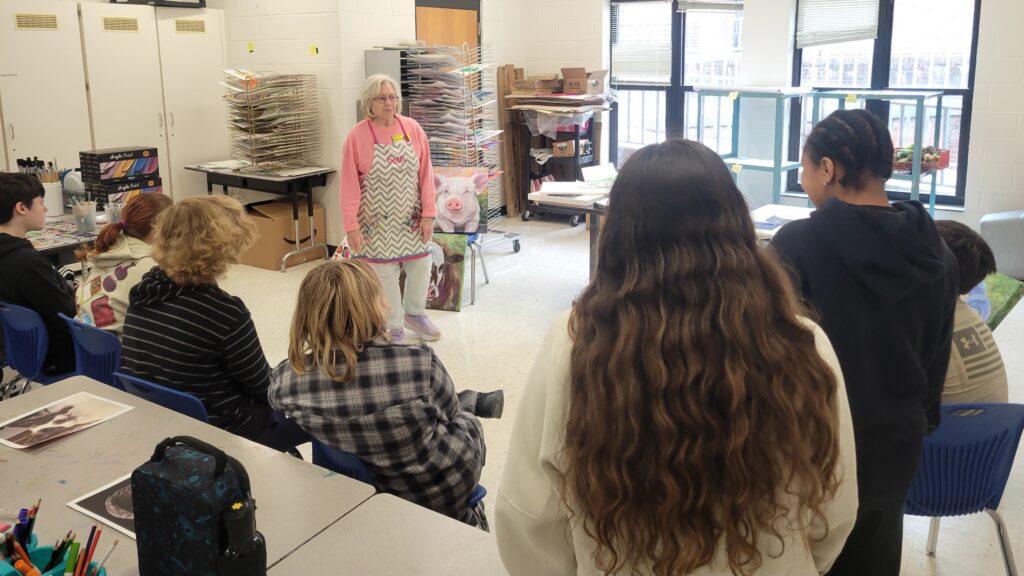
Austin Dorval, an art teacher at Southern Alamance Middle School, participated in the collaboration. He was paired with Briggette Slivinski, a ceramics artist and owner of Recovering Clay pottery studio in Burlington. Working together allowed Dorval and Slivinski to bounce ideas off each other as they introduced students to ceramics. Slivinski was also able to provide Dorval and his students with access to a kiln, which is something that the school currently doesn’t have available.
“We don’t really use or discuss clay making much,” Dorval said, adding that Slivinski was able to offer ideas that would have taken him much more research and trial and error to develop on his own.
The collaboration, he said, reaffirmed that there are people in the community who want to be part of things that relate to students and schools, and that teachers need to be willing to reach out and build those relationships.
Working alongside a professional artist gave teachers the opportunity to learn new techniques and ideas that they could bring back into their classrooms. But the learning did not flow in just one direction.
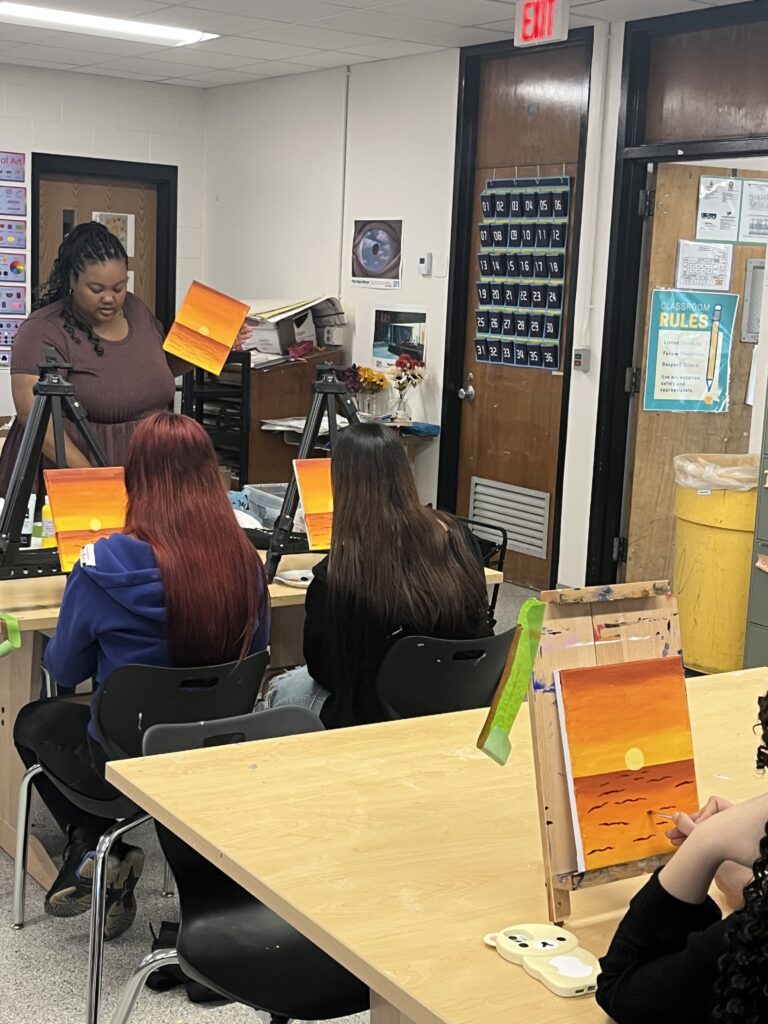
Local artist Jean Kaplan said working with a teacher inspired her to experiment with her own approach.
“I definitely learned a lot,” Kaplan said. “I just decided to play in a few different ways and see what would happen with her classroom in mind. That’s never a bad thing to experiment with.”
The partnerships also gave artists a closer look at both the talent of the students and the realities teachers face in trying to create meaningful arts experiences with limited resources. Artist Sara Anne Caudle said one of the biggest takeaways from working in the classroom was seeing how funding often limits what teachers are able to offer despite their dedication.
“Those kids just needed someone to believe in them,” Caudle said. “They needed someone to provide the experience for them, the tools for them, and they all created amazing pieces.”
Dana Wheeler, an art teacher at Western Middle School, said working with local artist Beth Hill provided her students with another perspective in the classroom and access to materials they otherwise might not have had.
“I think having somebody else’s perspective wakes the kids up a little bit more versus just seeing it from me,” Wheeler said. “We were able to get a grant to get the supplies needed.” Acrylic paint is not cheap, she added, so they often lean toward less expensive options like watercolor. Wheeler also incorporated what she learned into her course materials so she can continue teaching the techniques to future students, even without the artist in the classroom.
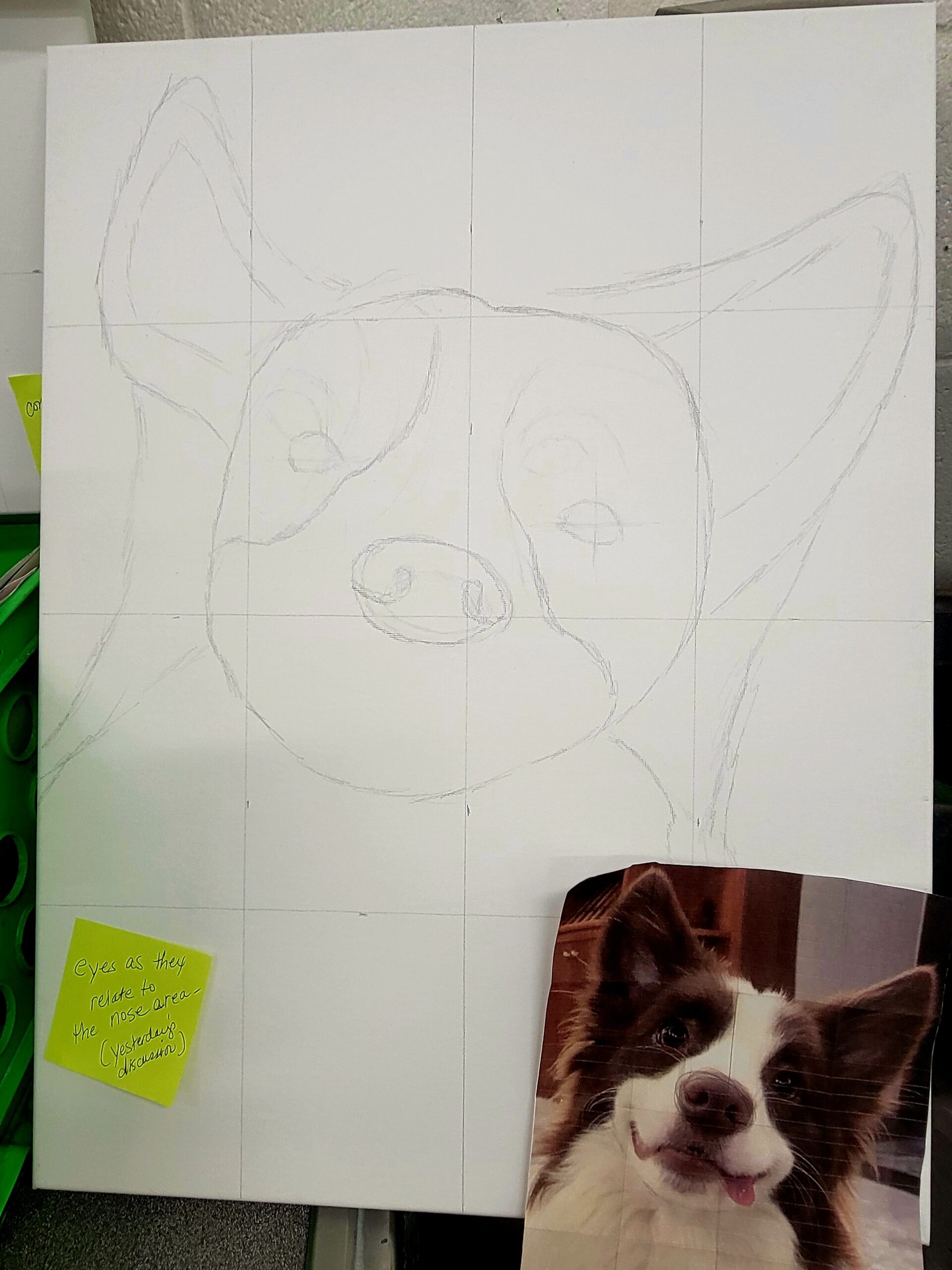
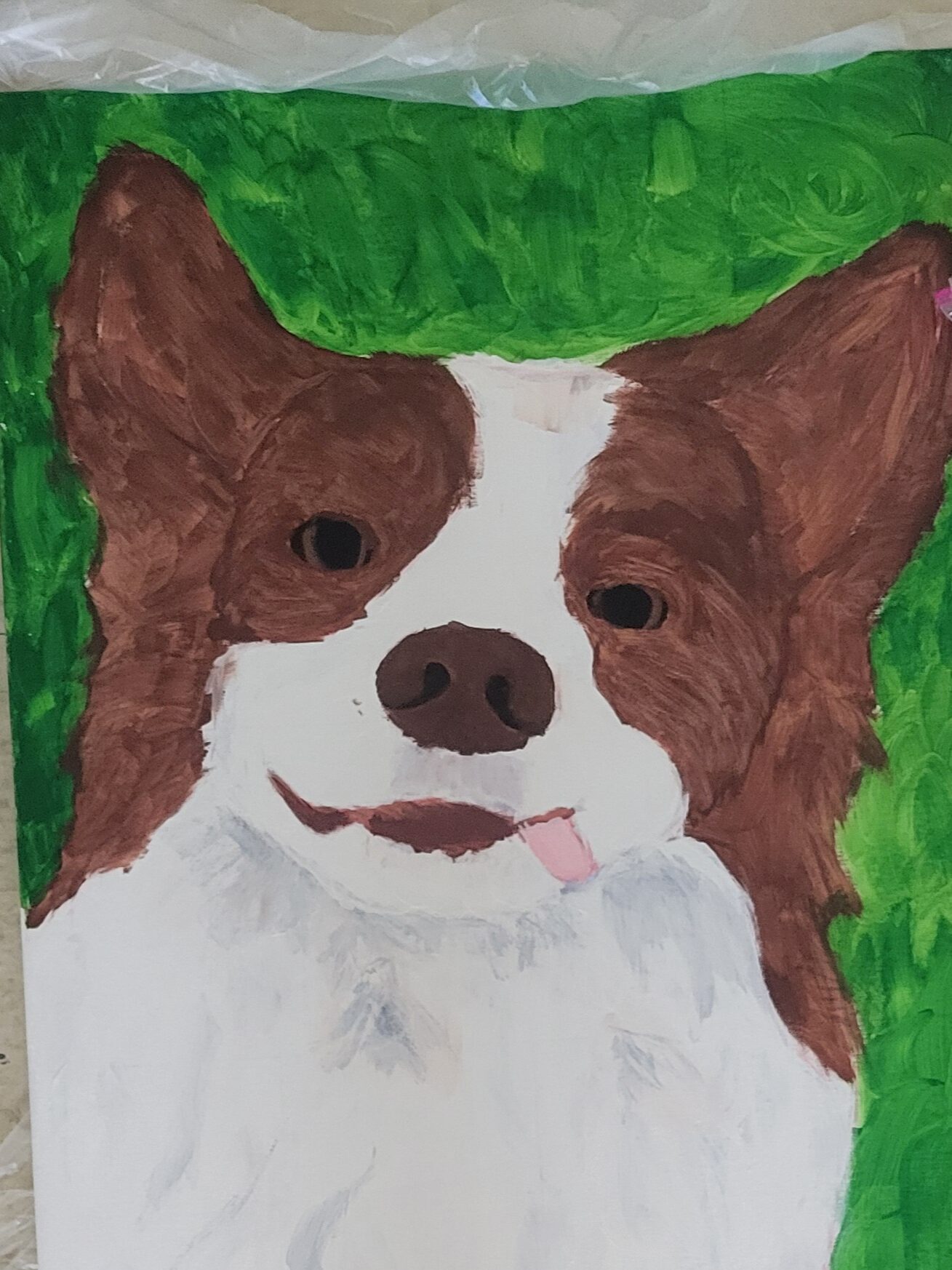
Above all, the partnerships created relationships that extended beyond the classroom. Teachers left with new contacts, additional resources and fresh ideas, while artists discovered new ways to engage with local schools and support the next generation of creators.
The connections have already prompted participants to think beyond the original project. Caudle said the experience made her want to find more ways to serve local schools through the arts, including potentially helping her partner school secure a kiln.
“Anytime you build collaboration,” Caudle added, “you expand each other’s circles of influence.”
As the project continues to grow, both teachers and artists expressed interest in participating again and expanding the initiative to reach even more students throughout Alamance County. For Wilder, that continued collaboration — and the relationships now forming between schools and the broader arts community — is exactly what the Arts & Culture Team hopes to inspire.
Get Involved
The For Alamance Arts & Culture Team uses creative expression to bring people together, build connections, and celebrate the diversity of experiences in our community. For more information on the team’s work, contact Cheryl Wilder at cheryl@bornwilder.com.
For Alamance is a local grassroots effort that empowers community members to take action on issues that matter to them. By listening to each other and working together, we’re building a more inclusive, hopeful path forward. For more information, contact Jewel White at jewel.white@conehealth.com