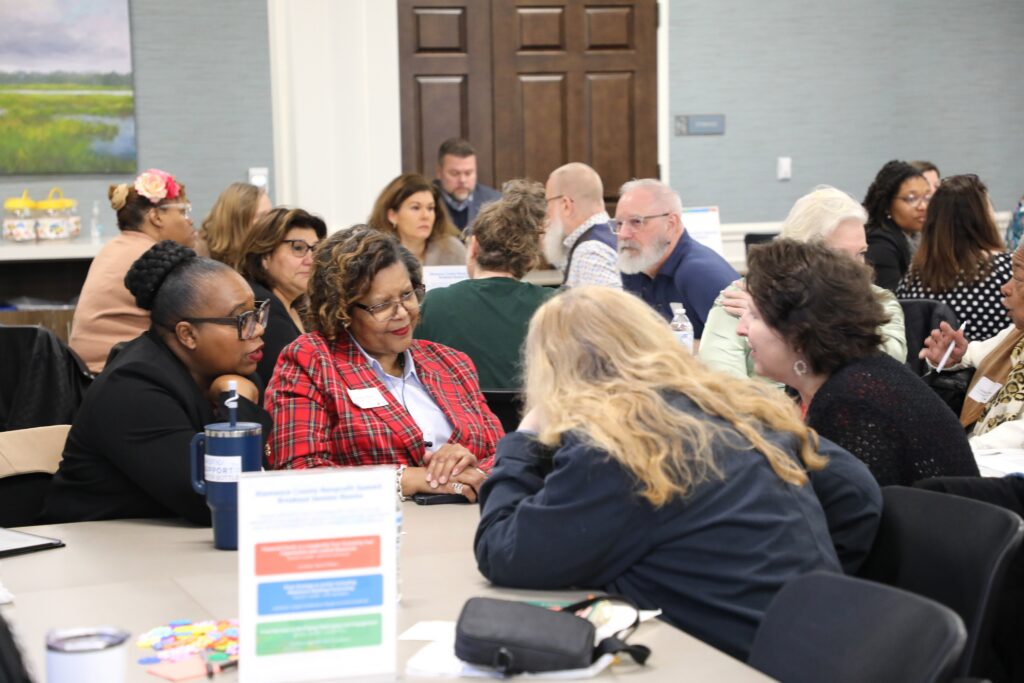
On February 18, the energy inside Impact Alamance was palpable as more than 60 nonprofit professionals from across Alamance County convened for the first-ever Alamance County Nonprofit Summit. Hosted in partnership with the United Way of Alamance County, the summit provided a dedicated space for nonprofit leaders and staff to connect with peers, learn from sector experts, and explore strategies to strengthen their organizations and advance community impact across the county.
A core purpose of the summit was not only to provide resources and learning opportunities, but also to foster collaboration and break down silos across the nonprofit sector. Organizers emphasized that the expertise needed to create meaningful change was already present—held by the people in the room who have collectively devoted decades to serving Alamance County.
“It was a joy to see so many nonprofit leaders come together for the summit,” said Nicole McGinty, Program Officer at Impact Alamance. “We’ve heard from our partners that the work can often feel siloed, and there was a clear demand for a space to connect with peers. The positive feedback has been incredibly encouraging, and we look forward to providing more opportunities in the future for our nonprofit partners to continue to connect and learn.”

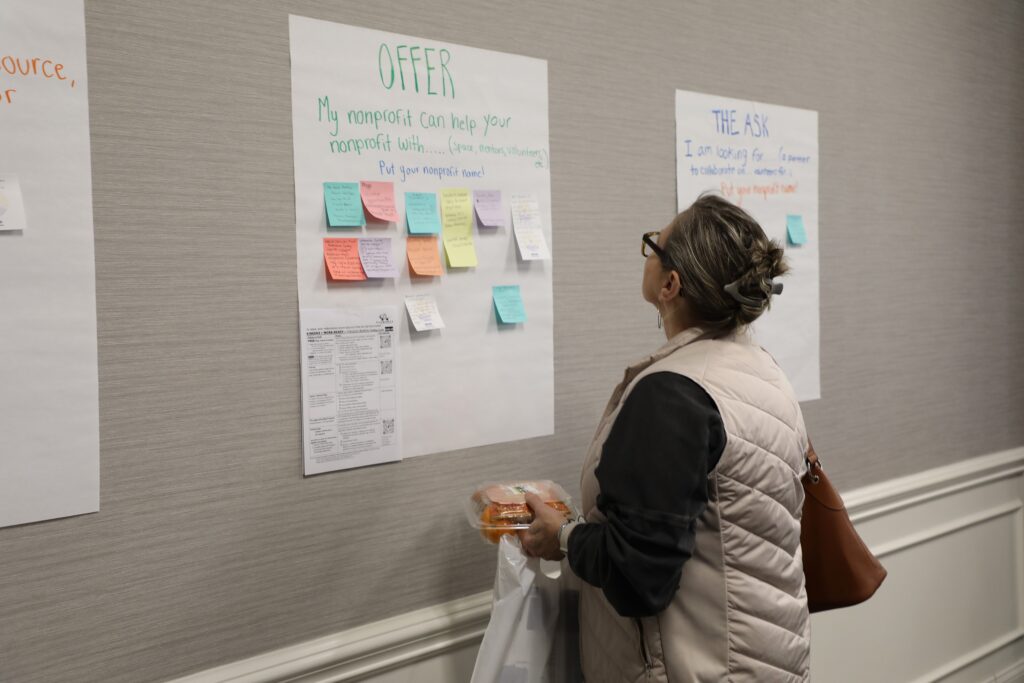
Throughout the morning, three interactive boards stationed around the space invited participants to add sticky notes with resources, needs, and lessons learned. These boards quickly evolved into a visual tapestry of shared wisdom, underscoring the idea that when nonprofits connect, their capacity and impact multiplies. This intentional focus on connection encouraged stronger partnerships, deeper mutual support, and a more unified ecosystem of nonprofit work in the county.
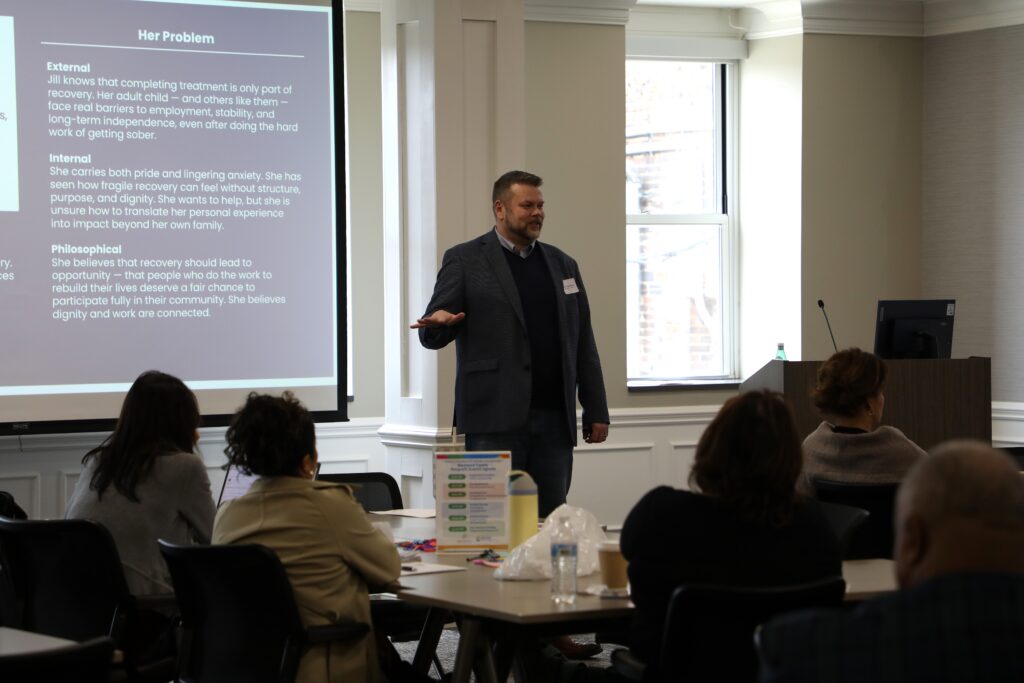
The day began with a session led by Sara Beth Hardy, Elon University’s Director of Community Partnerships. Her workshop, Building Effective Community Partnerships, encouraged participants to reflect on what makes collaboration truly work. Through guided discussions and real-world examples from local nonprofit leaders, attendees explored strategies for building relationships that not only expand capacity but also deepen community impact.
Following the opening session, participants dispersed into breakout rooms to attend two of three specialized workshops—each led by sector experts and designed to equip attendees with practical strategies they could apply immediately.
The first workshop, Financial Clarity as a Leadership Tool: Sustaining Your Organization with Limited Resources, was led by Jasmine Galloway, founder and CEO of Good Steward Financial, a firm dedicated to helping nonprofit leaders achieve financial stability for sustainable, long-term growth. Participants discussed how strong financial communication builds trust, strengthens boards, and supports long-term stability—especially when resources are limited.

The second workshop, From Strategy to Action: Activating Movement-Building Fundraising, was led by Josh Jacobson, CEO of Next Stage Consulting, which partners with nonprofits, businesses, and governmental agencies to implement effective strategies that fuel social change. Josh challenged participants to reconsider how they approach donors and shared strategies to align storytelling, messaging, and outreach. One attendee said the session changed how they think about fundraising entirely: “I really struggle with asking for money…switching to an abundant, donor-based mindset really made the whole concept more comfortable to me.”
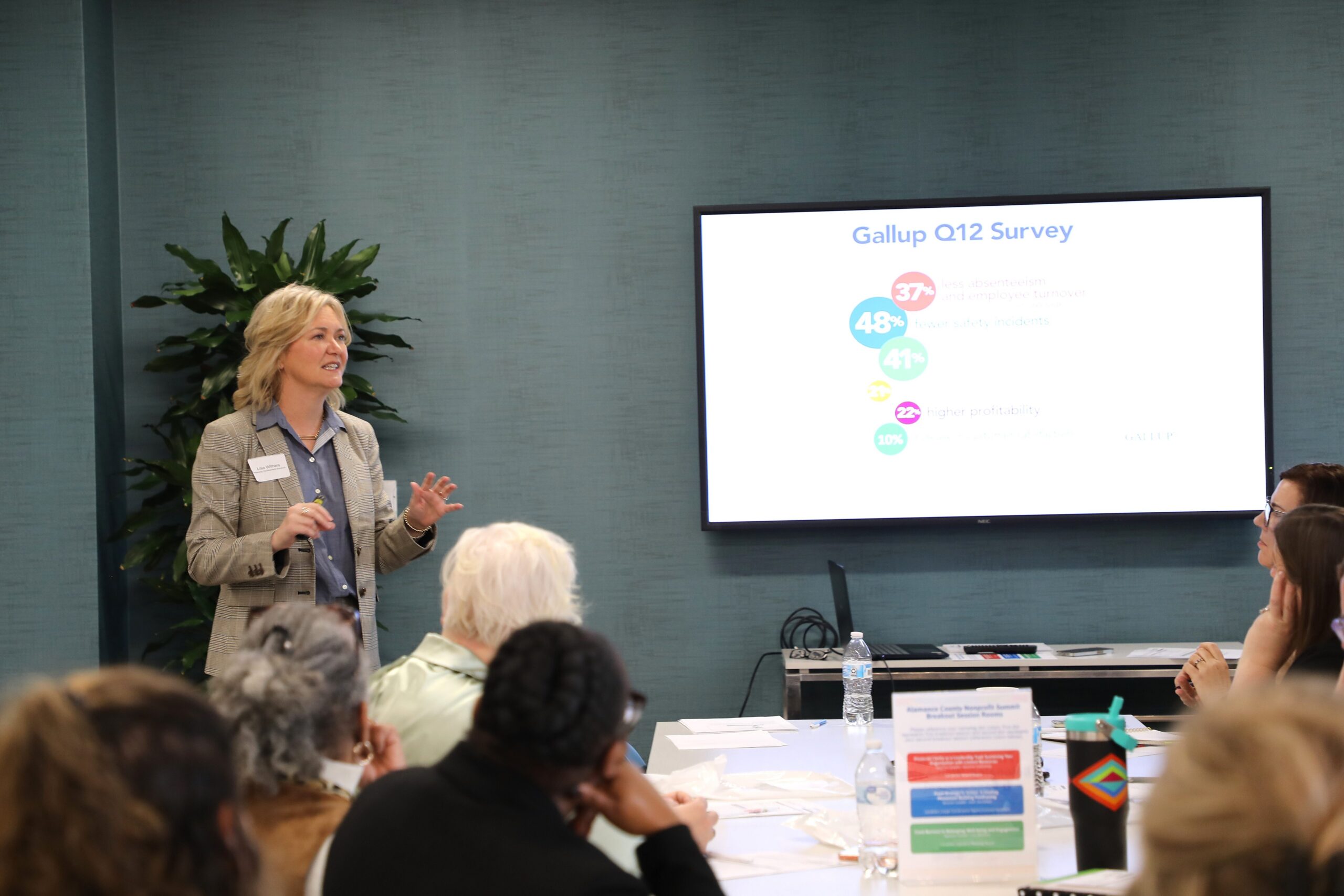
Leadership Development expert Lisa Wither led the third workshop, From Burnout to Belonging: Well-Being and Engagement, guiding participants through a conversation on well-being, burnout, and strengthening engagement within organizations. Drawing on twenty years of leadership development experience, she offered practical tools to help nonprofit professionals care for themselves and their staff while also caring for their communities.
As the summit drew to a close, participants were invited to join one of five nonprofit learning communities, each centered around one of the five social determinants of health. These groups will convene regularly, creating ongoing opportunities for cross-sector connection, shared problem‑solving, and collective action. The excitement around these communities was tangible—proof that attendees were eager to keep the momentum going.
The energy and insights shared throughout the summit underscored the strength of Alamance County’s nonprofit community and the power of collective learning. By creating a space where leaders could connect, collaborate, and access tools that support their missions, the Alamance County Nonprofit Summit laid the groundwork for stronger partnerships and greater community impact in the years ahead. Impact Alamance and the United Way of Alamance County look forward to building on this momentum and continuing to support the nonprofits whose work strengthens communities across our county every day.